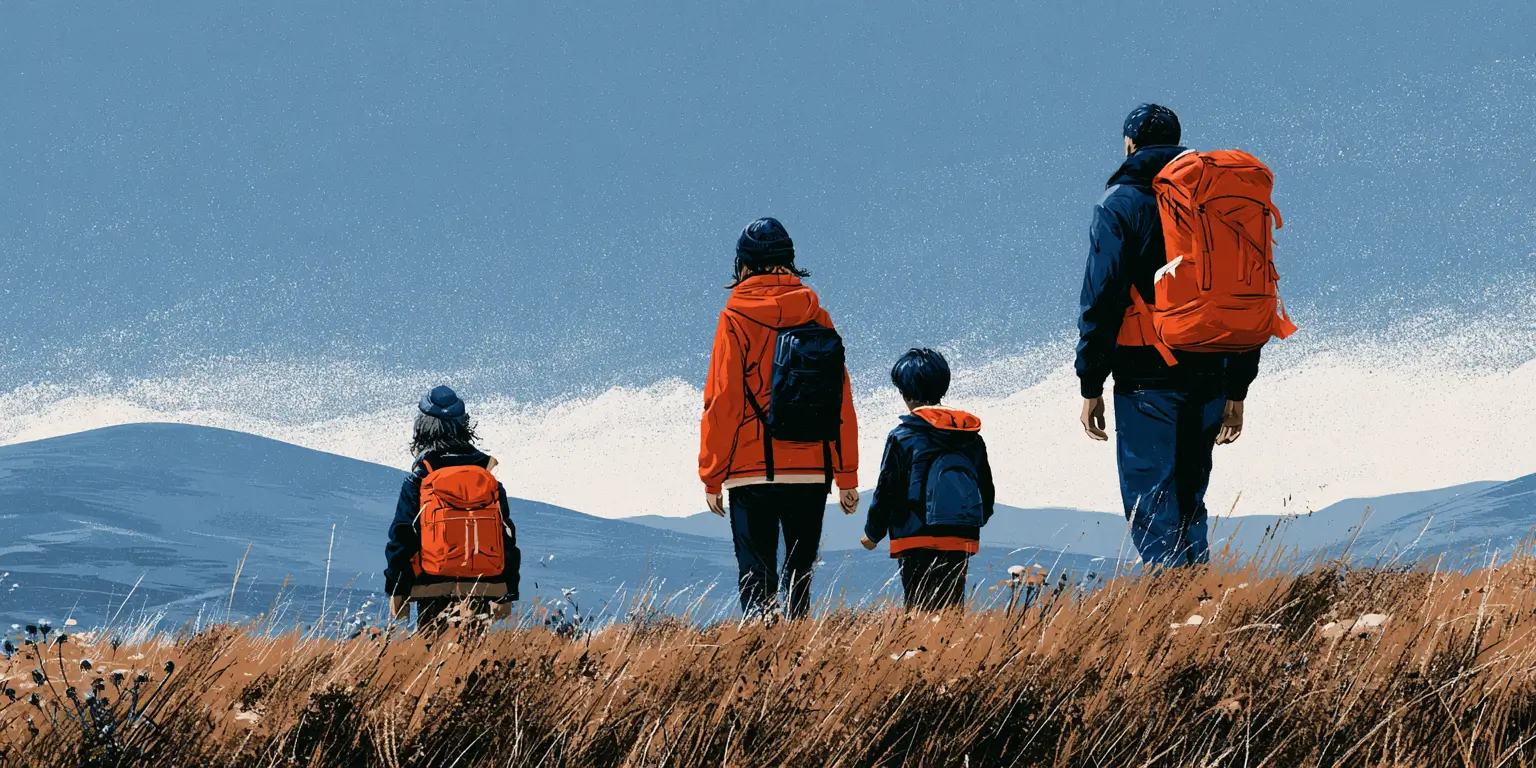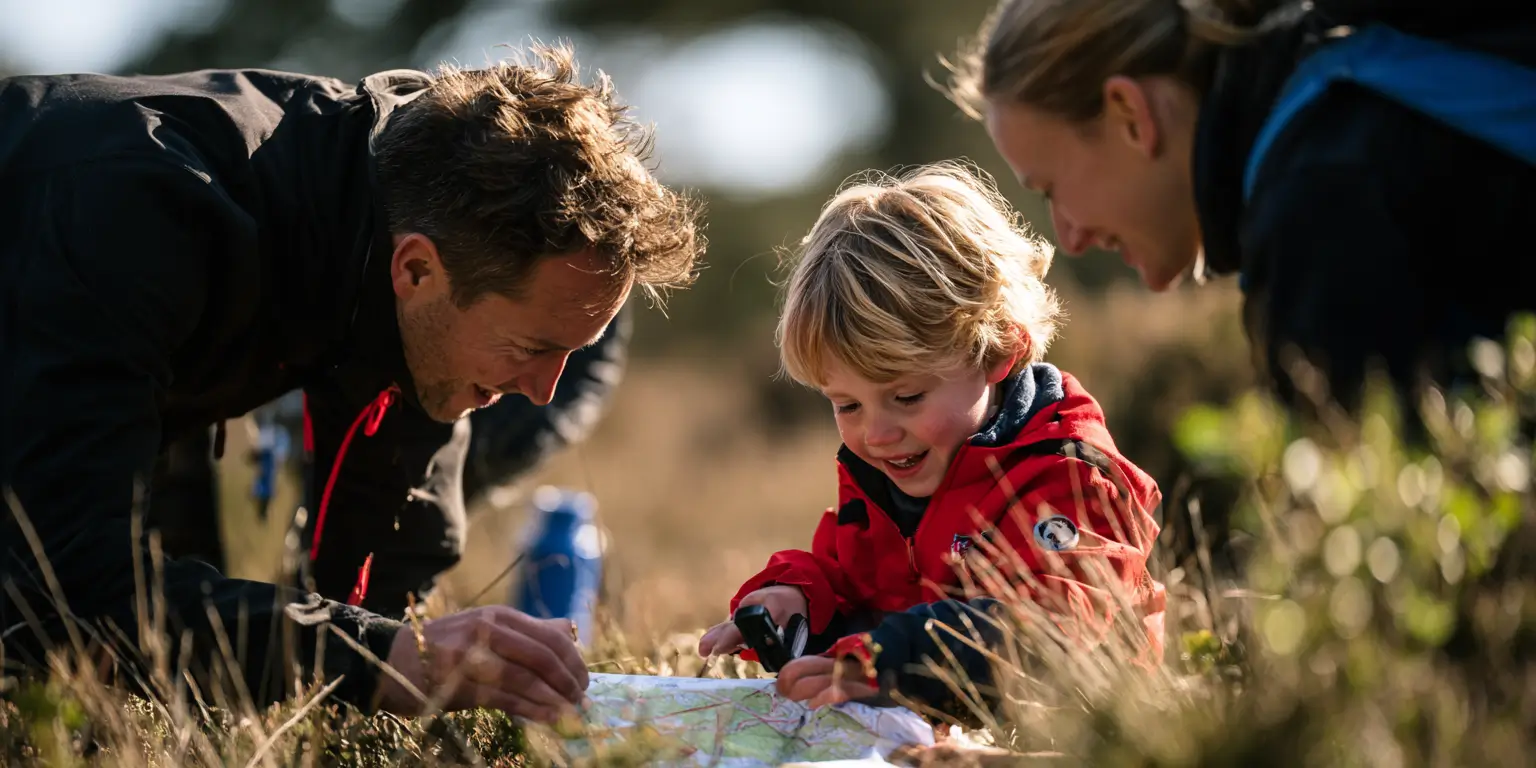
Family orienteering works because it turns a simple walk into a measurable challenge. Instead of just covering ground, you are asking kids and adults to read a map, follow bearings, and make decisions under light pressure. That combination is powerful: it builds confidence, improves spatial awareness, and keeps everyone moving. For beginners, the best part is that the learning curve is gentle. A well-planned first outing can be successful even if no one has prior navigation experience.
Why orienteering is such a strong family activity
Compared with many outdoor hobbies, orienteering is unusually scalable. A five-minute park loop can work for a young child, while a longer woodland course can challenge teenagers and adults. The activity also fits different fitness levels because the pace is self-selected. In practical terms, a family can spend 45 to 90 minutes outdoors without needing special gear beyond a map, a simple compass, water, and appropriate shoes.
From a participation standpoint, that matters. Families are more likely to repeat an activity when the entry cost is low and the payoff is immediate. Orienteering delivers both. Children get the satisfaction of finding a checkpoint, and adults get a structured outing that feels more purposeful than a standard stroll. In many cases, the success rate on an easy beginner course is high enough to keep morale strong: if the controls are clearly placed and the route choices are short, most families can complete the course with only a few navigational corrections.
Choose the right location for first-time success
The ideal beginner venue is not the most dramatic one. It is the one that minimizes avoidable mistakes. Look for a park, school grounds, botanical garden, or designated orienteering area with clear paths, obvious landmarks, and limited hazards. For a first family event, an area of roughly 10 to 25 acres is often enough to create variety without making the map feel overwhelming.
Try to avoid dense forest, steep slopes, or locations with major road crossings until the family has basic map-reading confidence. Open spaces with a mix of paths, fences, playground edges, and tree clusters are easier to interpret. If the venue already has permanent controls or marked features, even better. The goal is to reduce the number of variables so the family can focus on learning the process rather than recovering from navigation errors.
What equipment you actually need
Beginners often overpack. For family orienteering, the essentials are modest:
- Map: A printed orienteering map or a simple park map with clear features.
- Compass: One per family is enough to start, though one per person helps with practice.
- Water: Especially for outings longer than 30 minutes.
- Footwear: Comfortable shoes with decent grip.
- Small snack: Useful for younger children and for maintaining energy.
If you want to make the outing feel more like a game, add a pencil for marking checkpoints or a simple punch card. You do not need GPS devices or expensive technical clothing to have a good first experience. In fact, reducing gear complexity helps keep the focus on navigation and teamwork.
Designing a beginner-friendly course
The best beginner courses are short, obvious, and forgiving. A family loop with 4 to 6 controls is usually enough for a first outing. Keep the distance between controls modest, ideally 100 to 300 meters apart in a park setting. That spacing gives participants enough walking time to practice reading the map without stretching the outing into a fatigue test.
Use landmarks that are easy to identify from the map: playgrounds, benches, trail intersections, open lawns, fences, or buildings. Each checkpoint should have a distinct feature nearby so the family can confirm location quickly. A course with controls placed too close together can feel confusing, while one with large gaps can increase the odds of getting lost. The sweet spot is a route that allows frequent success moments.
If you are planning for younger children, think in terms of visible progress. A child who reaches a checkpoint every 5 to 8 minutes is more likely to stay engaged than one who must walk for 15 minutes before the next reward. That pacing also helps manage attention spans. For older kids, you can stretch the distance a little and introduce more route-choice decisions, such as whether to stay on a path or cut across open ground.
How to explain map reading to kids and beginners
Keep the instruction simple: turn the map so it matches the world around you. That single habit solves a large share of beginner confusion. Next, show how to identify the start point, the next control, and a few obvious features in between. Avoid overloading the family with technical terms at the beginning. A compass bearing can come later, after everyone understands how to match the map to nearby objects.
One effective teaching method is the three-step routine:
- Find where you are on the map.
- Look for the next obvious landmark.
- Walk to that landmark, then check again.
This approach keeps the navigation process manageable. It also encourages families to move in short decision cycles rather than committing to a long, uncertain route. For beginners, that is often the difference between a fun challenge and a frustrating one.
Make it a team activity, not a test
Family orienteering works best when everyone has a role. One person can hold the map, another can watch for landmarks, and a child can be the checkpoint finder. Rotating roles keeps the outing collaborative and gives each person a chance to contribute. It also reduces the chance that one adult becomes the sole navigator while everyone else becomes passive.
If you are using the activity with mixed ages, adjust expectations accordingly. Younger children often perform best when they are asked to spot colors, shapes, or trail signs rather than interpret the full map. Older children can handle more responsibility, such as choosing between two route options. By sharing tasks, the family creates more engagement per minute spent outdoors.
Build in games and rewards
Children respond well to immediate feedback. You can add simple game elements without compromising the orienteering basics. For example, assign each control a letter and ask the family to spell a word at the end. Or let kids collect one point per checkpoint and exchange points for a picnic snack afterward. These small incentives can raise motivation significantly because the reward arrives quickly.
Another useful tactic is the time challenge, but keep it friendly. Rather than racing, compare the family’s time against their own previous outing. That creates a measurable improvement target without turning the day into a competition against strangers. In statistics terms, the best benchmark for beginners is internal progress: fewer wrong turns, faster checkpoint recognition, and less adult intervention over time.
Safety and pacing matter more than speed
Even a beginner course should have a clear safety plan. Set boundaries before starting: roads are off limits, the group stays together unless an adult says otherwise, and everyone knows the meeting point if separated. For younger children, the safest pattern is to keep the group within visual range at all times. In a public park, that usually means the family should never be more than a short jog away from each other.
Pacing is equally important. Overly long routes can cause decision quality to drop. Fatigue affects patience, which affects navigation. A route that takes 60 minutes at a relaxed pace is usually better than a 90-minute route that ends with complaints. If the family is new to the sport, stop while energy is still positive. That increases the odds they will want to do it again.
Common mistakes beginners make
Several patterns show up repeatedly among first-time families:
- Overcomplicated maps: Too much detail can overwhelm new participants.
- Too many controls: More checkpoints do not always mean more fun.
- Poor scaling: Long distances between controls can tire younger children quickly.
- Ignoring landmarks: Families sometimes focus on the line between controls and miss the obvious route features.
- Starting too fast: Rushing increases the probability of wrong turns.
Avoiding these errors improves the odds of a successful outing more than any advanced technique. In beginner activities, simplicity is not a limitation; it is a performance advantage.
A sample first-day plan
If you want a practical blueprint, use this structure for a first family outing:
- 10 minutes: Explain the map, the controls, and the safety rules.
- 30 to 45 minutes: Complete a short course with 4 to 6 controls.
- 10 minutes: Review the route and ask each person what they noticed.
- 15 minutes: Picnic, snack, or relaxed play to end the day positively.
This format keeps the outing compact and memorable. It also creates a natural feedback loop, because the family can discuss what worked while the experience is fresh. If a child correctly identified a landmark or an adult found a better route choice, call it out. Positive reinforcement makes the next outing easier.
How to make the next outing better
After one or two beginner sessions, you can increase difficulty in small steps. Add one extra control, introduce a simple compass bearing, or move the course into slightly more varied terrain. The key is progression of about 10 to 20 percent at a time, not a dramatic leap in complexity. That approach mirrors how athletes build skill in many sports: steady increments produce better retention than abrupt jumps.
Over time, families often discover that orienteering becomes more than a one-off activity. It becomes a repeatable outdoor routine that blends exercise, problem-solving, and shared achievement. The numbers support that appeal: short sessions are accessible, the equipment list is small, and the learning curve is forgiving. For beginners looking for an outdoor adventure that feels both playful and purposeful, family orienteering is one of the most efficient choices available.