Track and field has a way of stripping sport down to its purest form: speed, strength, rhythm, and nerves. I spent enough time around locker rooms and warm-up areas to know that every event has its own personality. Some are all-out explosions. Others are measured, technical, and unforgiving if you lose focus for even a split second. If you have ever watched a meet and wondered why one athlete looks like a sprinter, another like a gymnast, and another like a chess player with spikes on, that is the beauty of this sport.
Here are seven track and field events you should know about, along with what really matters when the gun goes off or the runway opens up.
1. The 100-Meter Dash
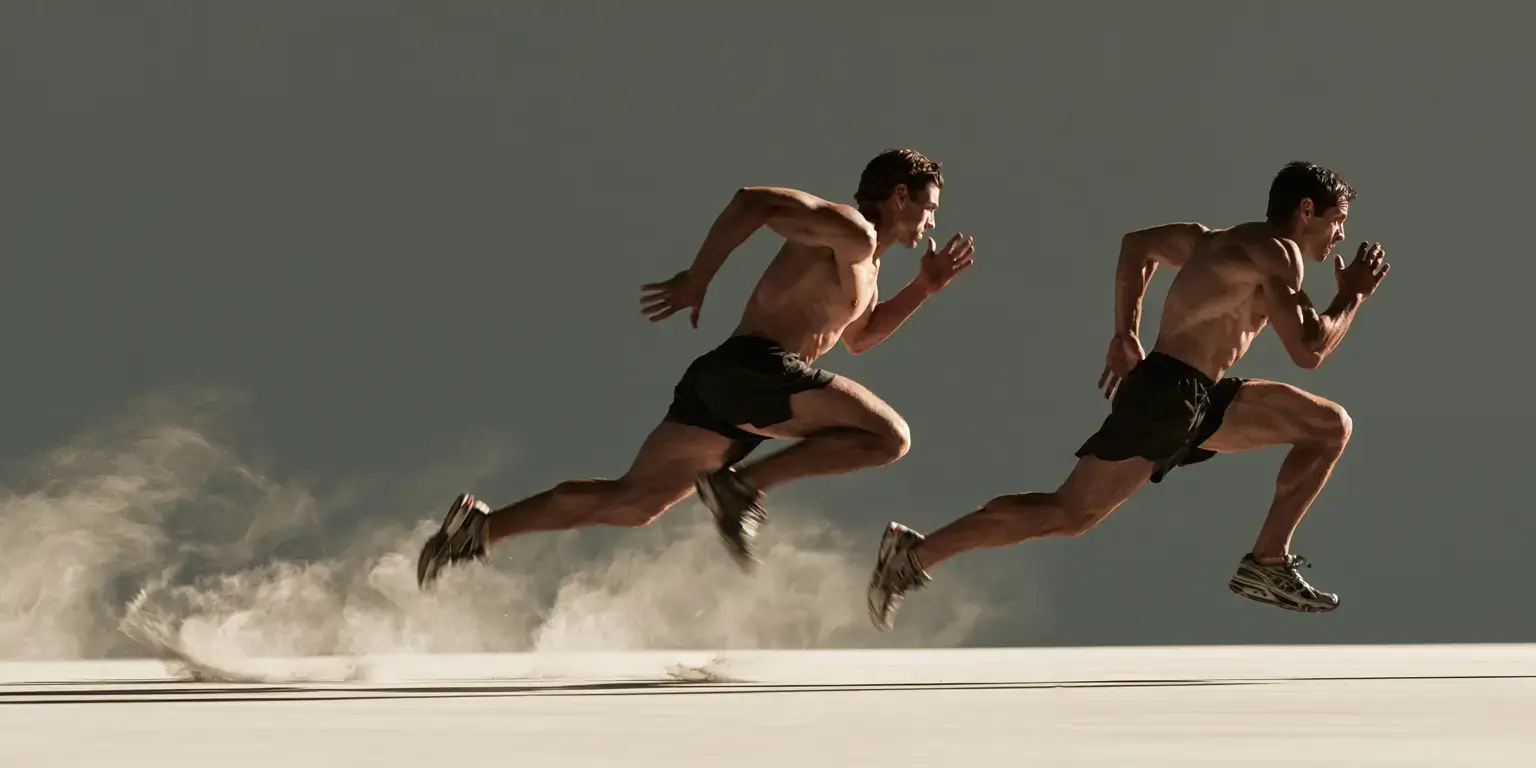
If track and field has a headline act, the 100-meter dash is usually it. This is the event people understand instantly: fastest person wins. But from the inside, it is much more technical than it looks. In a race that lasts under 10 seconds for elite men and around 11 for elite women, there is no room to waste a step, pop up too early, or tighten up in the shoulders.
The 100 is about reaction, acceleration, and staying relaxed while your body is producing maximum force. The best sprinters do not look frantic. They look controlled, almost smooth, which is hard to believe when every muscle is firing. In team settings, we used to say the first 30 meters are about coming out of the blocks with violence, and the next 70 are about not panicking.
What to watch:
- Explosive block start
- Drive phase through the first 30 meters
- Top-end speed without tightening up
2. The 200-Meter Dash
The 200 meters is where sprinting gets a little meaner. You still need pure speed, but now you have to manage a curve, hold form longer, and trust your conditioning. This is the race where athletes who can relax under pressure often separate themselves. It punishes anyone who goes out too hard or loses posture on the bend.
From a competitor’s point of view, the 200 is a mix of power and discipline. You want aggression, but not the kind that makes you sprint tense. On the curve, body lean matters, lane discipline matters, and the transition off the bend into the straight often decides the race. If you have ever been in a relay room, you know athletes talk about the 200 like it is a sprint with a tactical problem built in.
What to watch:
- Efficient running on the curve
- Strong transition into the straightaway
- Maintaining form late in the race
3. The 400-Meter Dash
The 400 is one of the hardest events in all of sport. Anyone who has run one hard knows the truth: it looks like a sprint, but it feels like a fight. You need sprint speed, but you also need the patience to distribute effort across one full lap without blowing up before the finish.
A good 400 runner is part sprinter, part strategist. Go out too fast and the last 100 meters turns into survival mode. Go out too conservatively and you leave too much time on the track. The best athletes understand their split pattern and trust their race model. They know where to press and where to hold. In the locker room, the 400 gets respect because it exposes whether you can handle pain and still keep your technique together.
What to watch:
- Controlled opening 200 meters
- Relaxation through the backstretch
- Ability to hold form in the final straight
4. The 800-Meter Run
The 800 is where sprinting and distance running meet in the middle and argue. It is two laps of racing, but it is not a jog with a kick at the end. The event demands speed, endurance, and race intelligence, and the tactics can change depending on the field. Some races go out fast and become a grind. Others stay controlled early and explode in the final 200 meters.
The 800 is notorious for testing an athlete’s courage. You have to commit to position, tolerate discomfort, and know when to move. In many meets, the 800 is the event where the smartest runner often beats the strongest one. Positioning on the break, staying out of trouble, and having enough left to kick when the real race starts are all part of the job. That is why 800 runners often have a unique toughness. They need the speed of a mid-distance racer and the pain tolerance of someone who knows how to suffer.
What to watch:
- Fast but controlled first lap
- Tactical positioning in the pack
- Closing speed in the final 200 meters
5. The 1,500-Meter Run
The 1,500 meters is often called the metric mile, and it has a different feel from the raw chaos of shorter races. This is where patience, race rhythm, and tactical awareness matter just as much as fitness. A strong 1,500 runner knows how to sit in the pack, conserve energy, and stay mentally sharp while reading the race like a veteran.
This event is famous for kicks. Athletes who can hold a steady pace and then unleash a sharp finish in the last 300 to 400 meters are dangerous. But to get there, they need to stay relaxed in the middle stages, avoid unnecessary moves, and understand when the pace is honest versus when the field is bluffing. In team environments, this is the race where you can almost see who has raced with confidence before and who is still figuring out how to trust their legs.
What to watch:
- Pack positioning and pacing discipline
- Ability to respond to surges
- Strong finishing kick
6. The Long Jump
The long jump is one of those events that looks elegant when done well and messy when done poorly. The athlete sprints down a runway, hits a takeoff board, launches into the air, and tries to land as far out as possible in the sand. Simple on paper, brutal in practice. The margin between a great jump and a foul can be tiny, and that puts a premium on accuracy under speed.
The long jump is really a test of runway rhythm, confidence, and technical consistency. You have to accelerate aggressively while keeping enough control to hit the board properly. Once in the air, body position matters. The landing matters too, because even a strong jump can be lost if the athlete falls back and leaves distance in the pit. In the field event room, long jumpers are often some of the most explosive athletes on the squad, the kind who bring sprint speed and competitive edge in equal measure.
What to watch:
- Runway speed and board accuracy
- Clean takeoff mechanics
- Efficient landing in the pit
7. The Shot Put
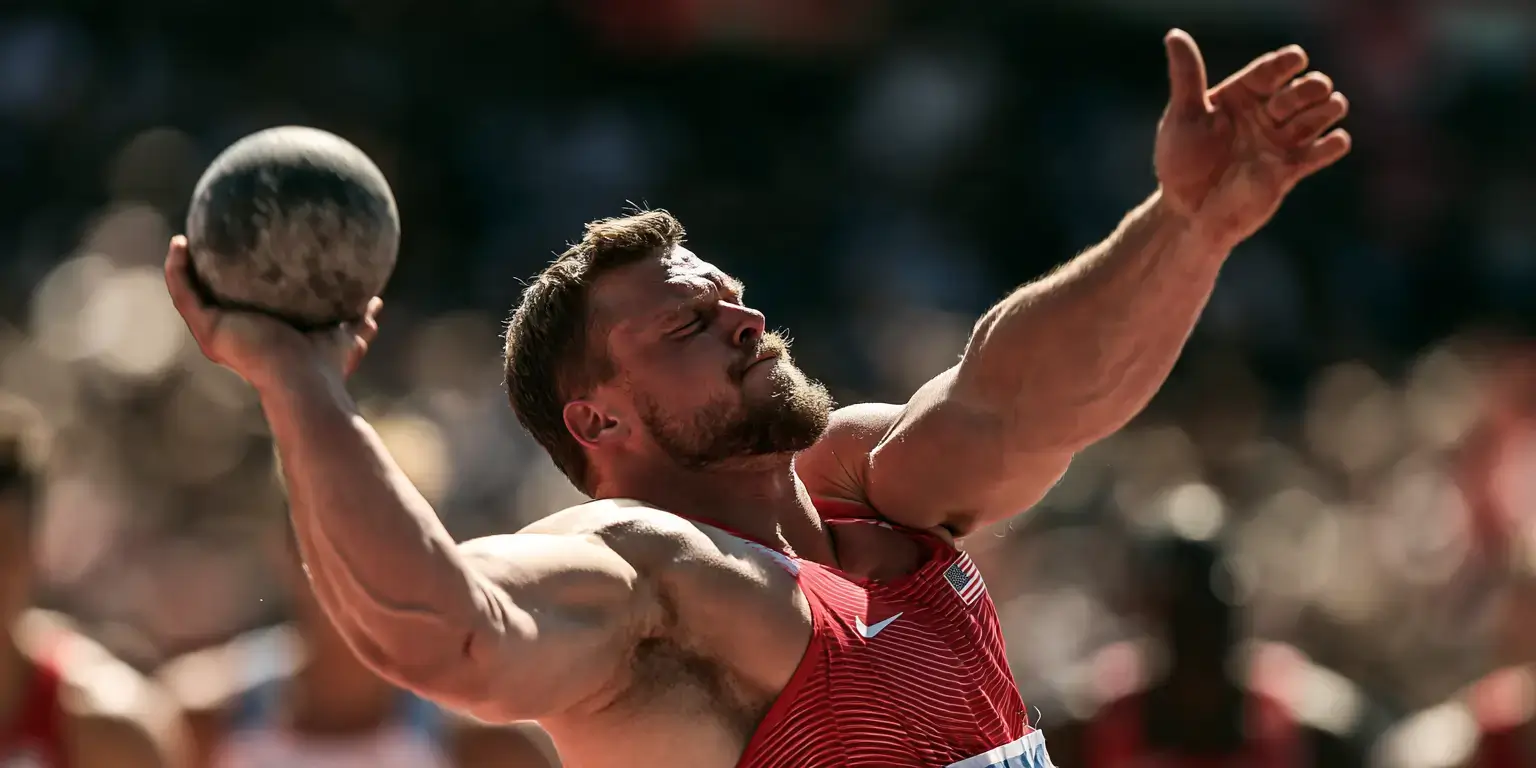
The shot put is pure power with a serious technical backbone. The goal is to launch a heavy metal ball as far as possible from a circle, but that simple description does not do it justice. Shot putters need strength, balance, timing, and a surprisingly refined sense of body control. The event rewards athletes who can transfer force from the ground through the hips, torso, and arm without leaking energy.
There are different techniques, including the glide and the rotational style, but both demand explosive hips and a strong finish. What casual fans often miss is how much footwork and position matter before the throw even happens. If your base is off or your timing is late, the throw dies quickly. In a well-run team, shot putters are often the backbone types: strong, dependable, and fiercely competitive. They may not get the same spotlight as sprinters, but every meet needs athletes who can deliver under pressure and set a tone for the rest of the squad.
What to watch:
- Explosive lower-body drive
- Stable body position through the throw
- Clean release angle and follow-through
Why These Events Matter
Track and field is more than a collection of races and jumps. Each event teaches a different lesson about competition. The sprinter learns how to commit without hesitating. The middle-distance runner learns how to read a race and trust timing. The field athlete learns how to repeat technical precision under pressure. Put it all together, and you get a sport that reveals character as much as ability.
If you have ever been around a team at championship time, you know the energy changes. Athletes start feeding off each other. Sprinters bring confidence. Distance runners bring grit. Jumpers and throwers bring momentum with every mark and attempt. That mix is part of what makes track and field such a compelling sport to watch. Every event has its own language, but they all speak the same one in the end: compete, stay composed, and find a way to bring your best when it counts.
Whether you are new to the sport or just want to understand it better, these seven events are the perfect place to start. Once you know what to look for, every meet becomes more than a blur of lanes and numbers. It becomes a battle of execution, nerves, and trust in the work done long before race day.