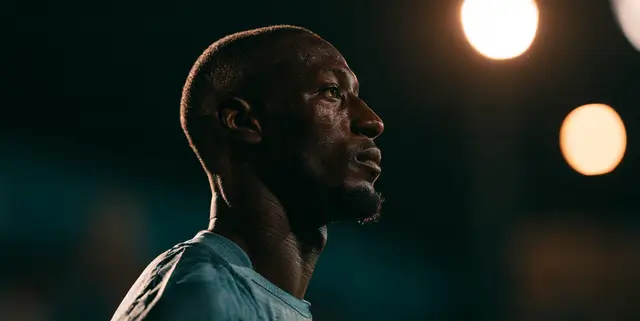
The moment that caught everyone off guard
Seko Fofana’s decision to step away from international football landed like a heavy tackle in the opening minutes: sudden, forceful, and impossible to ignore. For a player who has long been viewed as one of the most influential midfielders in his country’s modern era, the call to retire from national-team duty has sparked plenty of debate. When you’ve spent years in the professional game, you know these decisions rarely come from nowhere. There is always a mix of wear and tear, personal reflection, and the quiet toll that only the dressing room really understands.
On paper, Fofana still had more to give. He had the engine, the power, the ability to carry a team through difficult phases of a match. But international football is a different animal. It asks for repeated long-haul travel, shifting squad dynamics, and the emotional weight of representing a nation every few weeks. From the outside, people see the headlines and the highlights. Inside the camp, it is about recovery schedules, roles, expectations, and the pressure of being asked to lead in more than one jersey.
Why players reach this point
Retirement from international football is rarely just about age. In the pro game, midfielders like Fofana often take the biggest physical and mental hits because they cover so much ground and are expected to set the tone in both directions. You are asked to press, recover, organize, and still make the decisive pass when the game opens up. That load adds up. When a player has also carried leadership responsibility, the strain can become even heavier.
There is also the club-versus-country reality that every player knows. Club football gives you a rhythm. You train with the same group, work under one tactical plan, and live in a predictable cycle. International duty can interrupt that flow. Sometimes it is a privilege; sometimes it is a grind. The best squads handle that balance well, but not every player wants to keep paying that tax year after year.
In Fofana’s case, stepping away may reflect a desire to protect the remainder of his club career, focus on consistent performance, or simply reclaim some control over his football life. That is not weakness. Around any top dressing room, veterans will tell you that knowing when to step back is part of understanding your body and your limits.
What made Fofana so important
Fofana’s value has never been limited to flashy moments. He is the kind of midfielder coaches trust because he gives structure to a team. He can break up play, drive forward with purpose, and help teammates settle into their roles. In a locker room, players like that matter because they reduce chaos. They make the team feel connected from the back line to the front line.
What fans often miss is how much communication goes into a midfielder’s job. The good ones are constantly scanning, directing, and adjusting the shape. They’re not just chasing the ball; they’re managing space. That kind of responsibility is exhausting over time. It requires concentration every single minute, and when the body starts sending warning signs, the mental edge can go with it.
Fofana also represented something bigger than his own game. For younger players, he was proof that a midfielder from their system could become a reference point at the highest level. In team sports, that matters. A dressing room needs examples. It needs players who show that professionalism, discipline, and resilience can take you far even when the spotlight is elsewhere.
The locker-room side of a retirement call
When a senior player retires from international duty, the reaction inside the squad is often more complex than the public sees. There is respect, of course, but also a practical question: who fills the role, and how does the team adjust? Every departure changes the chemistry a little. Teams are not just collections of names; they are living groups with habits, trust, and unspoken rhythms built over years.
From experience, the quiet leaders are often the ones whose absence is felt most. They may not always be the loudest in interviews, but they are the players teammates look for in difficult stretches. They steady the group after a poor first half. They remind everyone to stay composed after conceding. They keep standards high in training, where the real culture is built.
That is why Fofana’s retirement will sting for those who shared the pitch with him. Not because he was irreplaceable in the literal sense, but because players of his profile help define a team’s identity. Once they are gone, others have to grow into that space fast.
What it means for the national team
For the national setup, this is both a loss and an opportunity. Losing an experienced midfield presence means losing a player who understands tournament football, the tempo of qualifiers, and the discipline needed to win ugly when the performance is not pretty. Those are the games that shape campaigns. They are the matches where a disciplined midfield can save the day.
At the same time, his departure opens the door for younger players to take responsibility. That is how cycles work in football. One leader steps away and another begins to emerge. The transition is rarely smooth, and anyone who has been part of a squad knows there is usually a rough patch before the balance settles again. But fresh energy can also bring sharper competition and a new tactical edge.
Coaches will now have to decide whether to replace Fofana’s profile directly or reshape the midfield around different strengths. That choice says a lot about a team’s ambition. Do you seek another all-action organizer, or do you move toward more technical control? There is no single right answer, but the most successful sides know how to make departures work for them rather than against them.
The human side fans don’t always see
Supporters tend to measure a player’s commitment by appearances and results, but football is a career lived under pressure that never really stops. Training, travel, recovery, media obligations, injuries, and the expectation to deliver every few days can wear anyone down. Add international duty on top, and the demands can become relentless.
That is why retirement decisions deserve more nuance than social media usually allows. A player is not simply choosing between loyalty and abandonment. More often, he is weighing the long-term cost of continuing against what he can still offer at the highest level. In many cases, the smart move is the one made before the body forces it.
Fofana’s call time on his international career should be viewed through that lens. He has given the shirt years of commitment, intensity, and competitive fire. If he believes the moment has come to step aside, that is his right. In football, timing matters as much as talent. Sometimes the strongest thing a player can do is leave the stage while the respect is still full.
What comes next
What remains now is the impact of his decision on both his club form and the national team’s future direction. Some players return from international retirement with renewed sharpness, their bodies fresher and their minds clearer. Others simply continue to evolve in a different role, with less external noise and more control over their week-to-week preparation.
For the next generation, Fofana’s path offers a lesson that goes beyond football. It shows that careers are not only built on highlights; they are managed through choices. You have to know when to push, when to lead, and when to step aside for the good of yourself and the team.
That is the hard truth from the inside of the game: the shirt matters, but so does the player wearing it. And once a midfielder who has carried so much responsibility decides he has done enough, the rest of us are left to understand the decision the same way teammates do in the dressing room — with respect, a bit of surprise, and the knowledge that nothing in football lasts forever.