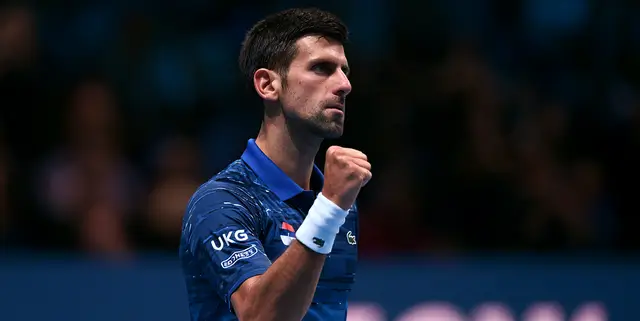
Novak Djokovic slipping out of the ATP Top 10 feels bigger than a ranking note. When a player has occupied the center of the sport for so long, the table gets rearranged around him, the locker room adjusts, and the whole tour starts answering a different set of questions. I have been around enough elite teams to know this: when the alpha presence changes, everybody feels it, even the players who swear they do not.
The end of a familiar order
For more than a decade, Djokovic was not just part of the conversation; he often was the conversation. His presence in the Top 10 gave tennis a kind of competitive gravity. Opponents planned for him, broadcasters centered him, and younger players measured themselves against his standard. With him outside that group, the sport loses a familiar reference point.
That does not mean Djokovic is finished, or that the level he can still produce has vanished. It means the weekly storyline changes. Rankings are the league table of tennis, and when one of the all-time greats drops out of the top tier, the message is clear: the next phase is here.
What changes inside the locker room
Players always say they focus on themselves, but that is only half the truth. In the locker room, hierarchy matters. You feel it in the hallway before matches, at the practice court, in the way guys carry themselves when the draw comes out. Djokovic out of the Top 10 gives several players a mental boost, because the old ceiling looks less permanent.
From a competitor’s point of view, that matters in three ways:
- Belief rises for the chasing group. If the standard-bearer is vulnerable, everyone else sees a path.
- Seedings shift, which changes draw dynamics and match preparation.
- Match pressure redistributes, because rivals no longer assume they will have to survive Djokovic in the later rounds.
That may sound subtle, but in pro sport subtle changes can swing entire seasons. I have seen younger players loosen up when a dominant veteran is no longer sitting at the top of the board. They start taking more ownership of big moments instead of waiting for the old guard to decide them.
The next generation gets a cleaner runway
This is the part tennis fans have been waiting for: a more open lane for the next wave. Carlos Alcaraz, Jannik Sinner, and other rising contenders have already shown they can handle the spotlight. Djokovic’s ranking drop does not magically make them better, but it does remove one more layer of historical pressure.
When a legend is still parked in the Top 10, every tournament has a shadow attached to it. The young stars are not just trying to win; they are trying to prove they belong in the same breath as a titan. Once that titan is no longer occupying one of the elite slots, the conversation becomes more about who owns the present rather than who is trying to inherit the past.
That is healthy for the sport. Rivalries need friction, but they also need space. Tennis now gets a little more room to breathe around a new core of players who can build their own identities instead of forever playing in someone else’s era.
Djokovic still changes the math
Do not confuse a Top 10 exit with irrelevance. Great champions stay dangerous because they know how to win when the margins are tight. Djokovic has built a career on pattern recognition, discipline, and the kind of match management you only learn through years of high-stakes tennis. He reads opponents like a veteran quarterback reading a disguised defense.
That is why nobody in the draw will celebrate too early. A lower ranking can be misleading when it comes to someone with his experience. If he gets healthy, sharp, and motivated, he can still turn a tournament upside down. In the sport’s inner circles, players respect not just the title count but the ability to raise level on demand. Djokovic has never lacked that.
The real difference now is strategic. He may have to work through tougher early-round matchups, and that can create more physical wear over a season. It also changes how he and his team manage scheduling, recovery, and peaking for the biggest events. At this stage, every decision is about conserving energy without losing sharpness.
What the tour gains
For tennis as a product, there is both risk and opportunity. The risk is obvious: any sport loses a little star power when an icon drops from the elite ranks. The opportunity is bigger. A less predictable Top 10 means more meaningful matches, more fresh faces in late rounds, and more markets where fans can attach themselves to new storylines.
That is how a sport renews itself. You do not want the league to feel like a closed club. You want new blood pressing the old guard, with enough unpredictability to keep every round relevant. From a fan’s perspective, that means more reasons to tune in. From a player’s perspective, it means more belief that the door is actually open.
Some of the best locker rooms I have been in had one thing in common: the veterans set the standard, but the young guys believed they could take the shirt off the wall if they earned it. Tennis is entering that kind of stage again. The old standard is still there in memory, but the chasing pack can smell space.
What happens now
Expect three things. First, the media will spend less time asking whether Djokovic can hold off the next generation and more time asking which player is ready to seize the moment. Second, tournament draws will feel less top-heavy in the psychological sense, even if the quality at the top remains fierce. Third, Djokovic himself will likely respond the way champions do: by treating the drop as fuel, not a verdict.
The bigger picture is simple. Tennis is not losing its past; it is crossing into a new chapter. Djokovic’s exit from the Top 10 does not erase what he built, but it does force the sport to stand on its own next generation of legs. That is the challenge every great era eventually faces.
And if you have spent time around elite competition, you know the truth: eras do not end with a ceremonial handoff. They end when the room starts believing the next group can win without asking permission. Tennis is there now.